
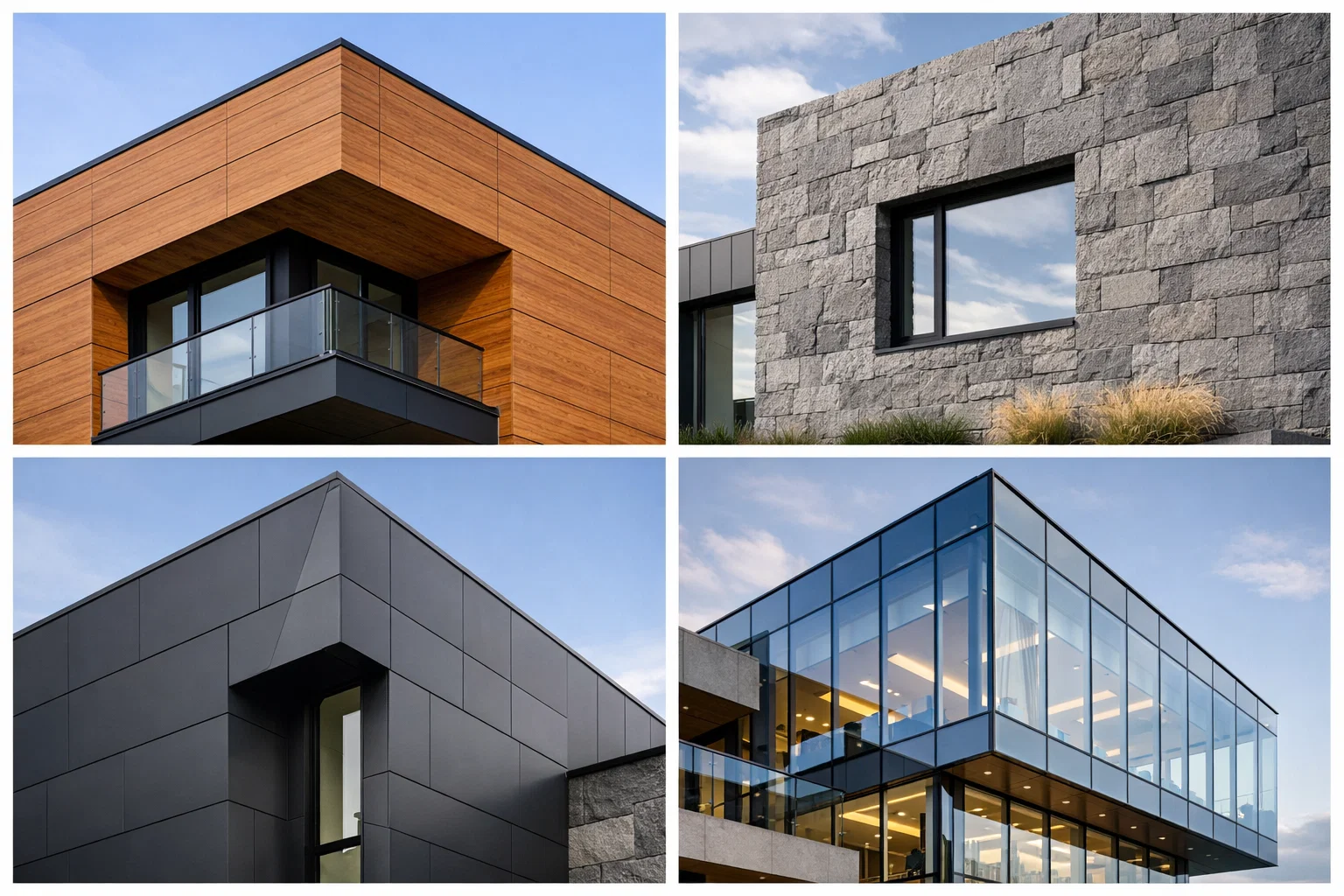
In modern architecture, the exterior facade of a building is no longer just a structural element. It has become a defining feature that represents the identity and design philosophy of a project.
Architects across the world carefully select exterior cladding materials that combine durability, design flexibility, and long-term performance. With rapid innovation in construction technology, a variety of advanced facade materials are now available.
Choosing the right cladding material can influence not only the visual appearance of a building but also its energy efficiency, maintenance requirements, and overall lifespan.
In this guide, we explore some of the most popular exterior cladding materials used by architects worldwide.
1. High Pressure Laminate (HPL) Panels
One of the fastest-growing facade materials in modern architecture is High Pressure Laminate (HPL) panels.
These panels are manufactured by compressing multiple layers of kraft paper and decorative surfaces under extremely high pressure and temperature. The result is a durable and decorative architectural panel that is suitable for exterior wall cladding.
HPL panels are widely used in commercial buildings, residential complexes, and institutional projects because they offer:
- Strong weather resistance
- Modern design finishes
- Long-lasting durability
- Low maintenance requirements
Architects often choose HPL panels when they want to create contemporary facades with wood textures, stone effects, or minimalistic color schemes.
Manufacturers such as HPLMaker focus on producing high-quality exterior-grade HPL sheets designed specifically for modern architectural applications.
2. Natural Stone Cladding
Natural stone has been used in architecture for centuries. Materials like granite, marble, and limestone provide a premium appearance and strong durability.
Stone cladding is often used in luxury buildings, hotels, and institutional projects where a classic aesthetic is desired.
However, stone cladding can be heavy and may require additional structural support during installation.
3. Metal Facade Panels
Metal cladding systems, including aluminum and steel panels, are widely used in modern commercial buildings. These panels create a sleek and contemporary look that is often associated with urban architecture.
Metal facade panels are lightweight and easy to install, but they may require protective coatings to prevent corrosion in certain climates.
4. Glass Curtain Walls
Glass curtain walls are commonly used in high-rise commercial buildings and corporate offices. They create a modern and transparent appearance while allowing natural light to enter the building.
Although glass facades offer aesthetic appeal, they may require advanced insulation systems to manage energy efficiency and temperature control.
5. Ceramic and Porcelain Panels
Ceramic and porcelain cladding panels are gaining popularity in architectural projects that require high durability and minimal maintenance.
These panels are resistant to moisture, fire, and temperature changes, making them suitable for many exterior applications.
Why HPL Panels Are Gaining Global Popularity
Among all these materials, HPL facade panels are rapidly becoming one of the most preferred options for architects.
The main reasons include:
- Versatile design options
- Excellent weather resistance
- Long service life
- Easy maintenance
- Modern aesthetic appeal
These qualities make HPL panels suitable for both residential and commercial buildings in different climates around the world.
The Future of Exterior Architecture
Modern architecture is moving toward materials that provide both functional performance and creative freedom.
Architects are increasingly exploring innovative facade materials that allow them to experiment with textures, colors, and structural patterns.
High Pressure Laminate panels are expected to play an important role in the future of facade design because they offer a balance between durability and design versatility.
Conclusion
Selecting the right exterior cladding material is one of the most important decisions in any architectural project.
From natural stone to modern HPL panels, each material offers unique advantages depending on the design goals and environmental conditions of the building.
As architectural trends continue to evolve, materials that combine durability, sustainability, and aesthetic flexibility will remain at the center of modern facade design.